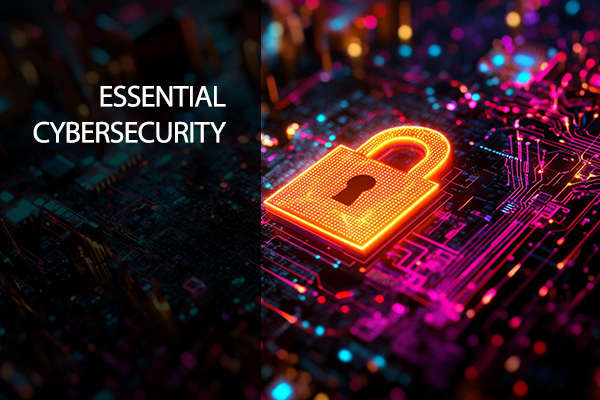
Cybersecurity Essentials: Protecting Yourself in the Digital Age
$49.00
A short beginner course on staying safe online. Learn to spot phishing, ransomware and scams, secure your home network and protect your identity in 1 hour 31 minutes across 10 video lessons.
- Login details sent straight after payment
- Self-paced. Study on any device
- StemBoss Certificate of Completion
- 14-day refund promise
Secure checkout. Pay by card, Apple Pay or Google Pay.
Cybersecurity Essentials: Protecting Yourself in the Digital Age is a short beginner course that teaches the habits that keep you, your devices and your data safe. It is for anyone who uses the internet at home or at work, with no technical background needed. The course runs for 1 hour 31 minutes across 10 video lessons, with 20 test questions.
What you will learn
- How to spot the most common cyber threats quickly
- How ransomware works and how to defend against it
- How to recognise phishing emails and messages
- How to secure your home network
- How to protect devices and data when working from home
- How social engineering tricks people and how to check a request before acting
- How to protect your digital identity and online accounts
- How AI helps detect threats, respond to incidents and catch fraud
Course outline
- Understanding Cyber Threats: welcome and five common cyber threats and how to stay safe
- Defending Against Cyber Attacks: defending against ransomware and phishing awareness
- Securing Your Digital Environment: securing your home network and work-from-home devices and data
- The Human Element of Cybersecurity: social engineering and protecting your digital identity
- The Role of AI in Cybersecurity: AI-powered threat detection, incident response and fraud detection
Who this course is for
- Anyone worried about online privacy and security
- Remote and hybrid workers
- Employees taking security awareness training
- Beginners thinking about a career in cybersecurity
- Professionals who want better day-to-day security habits
Before you start
You do not need a technical background. If you can use email, a web browser and online accounts, you are ready to start. Have your own router and devices to hand so you can apply the tips as you watch.
Jobs this course supports
This is a starter course, not a job qualification. It gives useful grounding for people heading towards these roles:
- Help desk support
- Desktop support
- IT support specialist
- Security awareness coordinator
- Junior security analyst
| Skill level | Beginner |
|---|---|
| Duration | 1 Hour 31 Minutes |
| Videos | 10 Videos |
| Questions | 20 Test Questions |
| Prerequisites | Basic comfort with email, web browsers, devices and online accounts. |
| Best for | Everyday internet users, remote workers, staff on security awareness training, beginners exploring cybersecurity |
| Topics covered | Common cyber threats, ransomware, phishing, home network security, working from home safely, social engineering, digital identity, AI in cybersecurity |
| Format | Online video lessons, self-paced |
| Language | English |
| Closed captions | Yes |
| Certificate | StemBoss Certificate of Completion |
What is inside this course
5 modules and 10 lessons. Here is the full outline.
Module 1 - Understanding Cyber Threats2 lessons
- 1.1 - Welcome to Essential Cybersecurity 101
- 1.2 - 5 Cyber Threats and How to Stay Safe
Module 2 - Defending Against Cyber Attacks2 lessons
- 2.1 - Defending Against Ransomware
- 2.2 - Phishing Attack Awareness
Module 3 - Securing Your Digital Environment2 lessons
- 3.1 - Securing Your Home Network
- 3.2 - Best Practices for Securing Work-from-Home Devices and Data
Module 4 - The Human Element of Cybersecurity2 lessons
- 4.1 - Understanding Social Engineering
- 4.2 - Protecting Your Digital Identity
Module 5 - The Role of AI in Cybersecurity2 lessons
- 5.1 - AI Powered Threat Detection and Prevention
- 5.2 - AI in Cybersecurity Incident Response and Fraud Detection
Your learning path
Where Cybersecurity Essentials: Protecting Yourself in the Digital Age fits. Build your skills one step at a time.
Frequently asked questions
Is this a good first course in cybersecurity?
Yes. It needs no technical background and takes about an hour and a half. It is a low-cost way to learn the basics before a certification course such as CompTIA Security+.
How can I spot a phishing email?
The course shows the warning signs of phishing and teaches you to check any unexpected request before you click, reply or pay.
How do I protect myself from ransomware?
A lesson covers how ransomware spreads and the steps that reduce your risk, such as keeping software updated and backing up your data.
Does the course cover working from home?
Yes. One lesson covers best practice for securing work-from-home devices and data, alongside securing your home network.
What should I take after this course?
For more depth, try Cybersecurity Awareness and Prevention or AI in Cybersecurity. If you want a career in the field, ISC2 Certified in Cybersecurity or CompTIA Security+ are good next steps.
Do I get a certificate?
Yes. You get a StemBoss Certificate of Completion when you finish the course.
Can I get a refund?
Yes, within 14 days if you have completed less than 20% of the course. See our refund policy for details. Read the refund policy.